Talk to an Attorney
Talk to an Attorney
Get a Free Consultation today. Call 334.738.4225.
You may have a claim if all of these describe you or a loved one:
Contact Us Now 334-738-4225
That’s common. Many people only remember being told they had “an eye stroke” or “damage to the optic nerve.” Tell us what you remember and what your eye doctor said, and we can help sort out the details from your records.
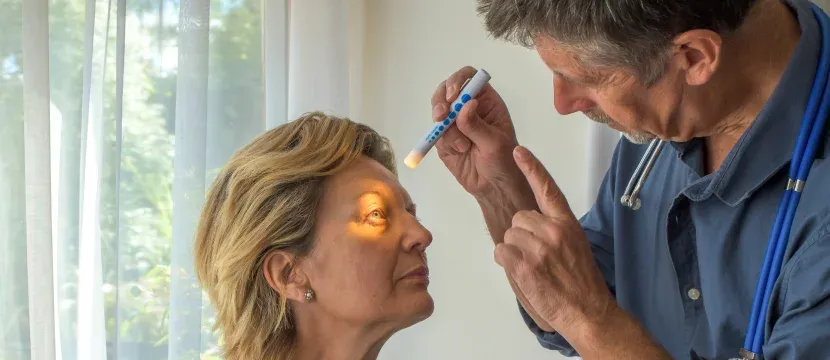
Nonarteritic anterior ischemic optic neuropathy, or NAION, happens when blood flow to the front of the optic nerve drops and the nerve is starved of oxygen. The optic nerve carries everything your eye sees to your brain, so damage there can cause vision loss that is often permanent.
There is currently no proven treatment that restores vision lost to NAION. Some people’s vision stabilizes; others see it worsen over several weeks. In some cases, NAION later affects the other eye.
If you notice sudden vision changes, contact an eye doctor or go to an emergency room right away.
Concern about semaglutide and NAION began when neuro-ophthalmologists noticed an unusual number of NAION patients who were taking these drugs. Since then, several studies and regulators have looked closely at the connection.
July 2024
Researchers at Massachusetts Eye and Ear, a Harvard teaching hospital, reported in JAMA Ophthalmology that patients prescribed semaglutide had a significantly higher risk of NAION than patients on other diabetes or weight loss medications. (1)
December 2024
A large registry study from Denmark and Norway found that people with type 2 diabetes taking semaglutide had more than twice the rate of NAION compared with people taking a different class of diabetes drug.(2)
2025
Additional studies and reviews, including work published in Acta Ophthalmologica, pointed to a higher NAION risk with semaglutide and recommended eye exams before starting treatment.(3)
June 2025
The European Medicines Agency’s safety committee concluded that NAION is a very rare side effect of semaglutide and recommended adding it to the product information. (4)
(1) Tell us what happened
Call or use the form below. We’ll ask which medication you took, when you started, and when your vision changed.
(2) We look at your records
With your permission, we gather pharmacy and medical records to understand your diagnosis and timeline.
(3) We explain your options
You’ll get a straightforward explanation of whether you may have a claim. You decide what to do, with no obligation.
Lawsuits filed against Novo Nordisk, the maker of Ozempic, Wegovy, and Rybelsus, claim the company knew or should have known about the risk of NAION and failed to warn patients and their doctors. The patient information for these drugs in the United States did not warn about NAION when these cases were first filed.
In April 2026, New Jersey courts granted a request to consolidate Ozempic and Wegovy NAION lawsuits into a multicounty litigation in Bergen County for coordinated proceedings. Separately, GLP-1 lawsuits over stomach and digestive injuries are consolidated in federal court.(5)
Researchers are also studying whether other GLP-1 medications, including Mounjaro and Zepbound (tirzepatide), carry a similar risk. If you took one of these and lost vision, reach out. We’ll tell you plainly where things stand.
“Vision loss changes everything, from driving to work to seeing your grandchildren’s faces. These lawsuits are about a simple principle: drug companies have a responsibility to warn people about serious risks. If you took Ozempic or Wegovy and your vision changed suddenly, we’ll take the time to understand what happened and explain your options plainly.”
— Lisa Littell, Attorney, Jinks Crow Trial Lawyers

Alabama generally allows two years to file a product liability lawsuit, and the clock can begin earlier than people expect. Deadlines are different in Georgia, Tennessee, and Florida. Talking with a lawyer soon helps protect your options.
Jinks Crow is a plaintiff-side trial law firm with offices in Montgomery and Union Springs. We represent people and families harmed by dangerous drugs, defective products, and corporate negligence, and we’re licensed in Alabama, Georgia, Tennessee, and Florida.
In pharmaceutical cases like this one, we may work alongside other law firms. If we do, we’ll tell you who is working on your case and how fees are shared, and we’ll get your agreement in writing.

Several studies have found that people taking semaglutide, the active ingredient in Ozempic, Wegovy, and Rybelsus, had a higher rate of NAION, an optic nerve condition that can cause permanent vision loss, including blindness in the affected eye. European regulators have listed NAION as a very rare side effect of semaglutide. Research is ongoing, and an association does not prove the drug caused a specific person’s injury.
Not without talking to your doctor. These medications treat serious conditions, and stopping on your own can carry its own risks. If you notice sudden vision changes, get medical care right away.
Most NAION claims are being filed as individual lawsuits that may be grouped together for pretrial proceedings, rather than as one class action. That means each person’s injuries and losses are evaluated on their own.
Contact us anyway. Researchers are studying whether other GLP-1 medications, including tirzepatide (Mounjaro and Zepbound), carry a similar risk. Claims involving other GLP-1 drugs or compounded versions depend on the facts and on research that is still developing, and we will tell you plainly where things stand.
Case reviews are free. If you hire Jinks Crow, we work on a contingency fee basis, which means you pay no attorney’s fee unless there is a recovery. We explain all fees and costs in writing before you sign anything.
Alabama generally allows two years to file a product liability lawsuit, and the time limit can begin earlier than people expect. Deadlines are different in Georgia, Tennessee, and Florida. Speaking with a lawyer soon helps protect your options.
Yes. A spouse, adult child, or caregiver can reach out for someone who has lost vision. We will make sure the person who was injured is part of the conversation before any decisions are made.
No representation is made that the quality of the legal services to be performed is greater than the quality of legal services performed by other lawyers.

Attorney advertising. This website provides general information only. It is not legal or medical advice, and viewing it or contacting us does not create an attorney-client relationship. Jinks Crow may associate with or refer cases to other law firms, with the client’s written consent.
Ozempic, Wegovy, and Rybelsus are registered trademarks of Novo Nordisk A/S. Mounjaro and Zepbound are registered trademarks of Eli Lilly and Company. Jinks Crow is not affiliated with either company.
Sources
Medical History Related to Medication Use:
We are investigating cases where the potential clients took name brand Ozempic, Wegovy, Rybelsus, Mounjaro, Saxenda, Trulicity, and Zepbound and were later diagnosed and treated for intraoperative pulmonary aspiration, ileus or bowel obstruction, gallbladder removal (if an Ozempic case, then the exposure must have been prior to the label change in March 2022), severe or permanent stomach paralysis, gastroparesis, other gastrointestinal injuries, acute necrotizing encephalopathy (ANE) (for non-Trulicity cases only), non-arteritic anterior ischemic optic neuropathy (NAION), or suicide. The PC must have had medical treatment or hospitalization for the injuries (except of course if the injury is suicide).

"*" indicates required fields
Copyright © 2026 Jinks Crow, PC. • All Rights Reserved. Disclaimer | Site Map | Privacy Policy. Digital Marketing By: 
*Images are obtained under license from Canva and other third-party stock image providers, with attribution included where required.